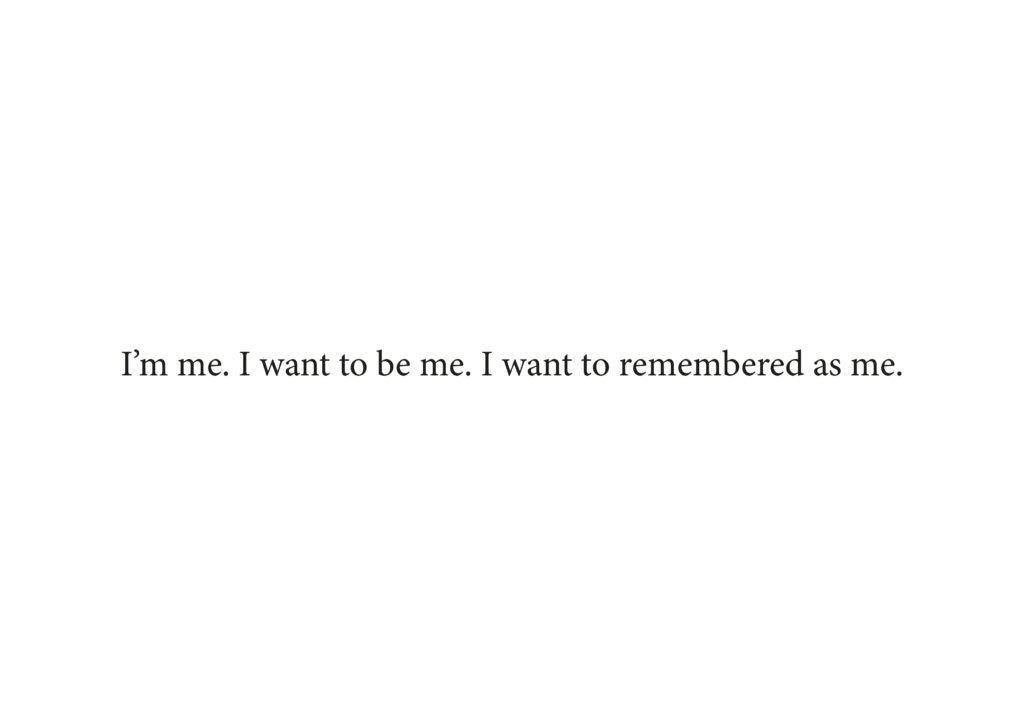
2026 | Full HD video, 9:04 min, artistic research since 2024 | Excerpts from interviews with women of various ages and backgrounds, conducted during my stay in Yerevan (AM) between January and March 2026, projected as a slide show onto branches in plastic water bottles, along with leaves collected from the street
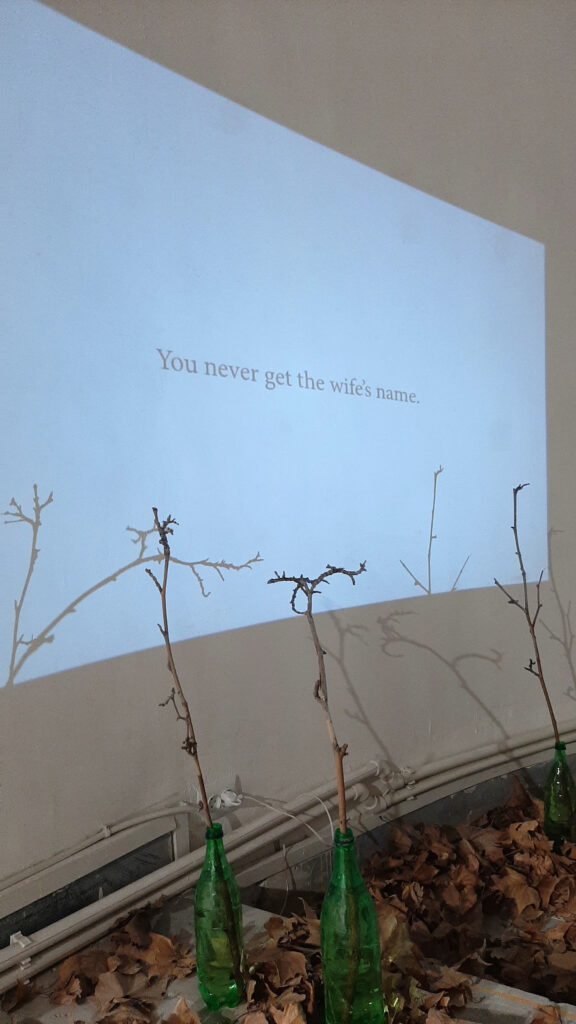
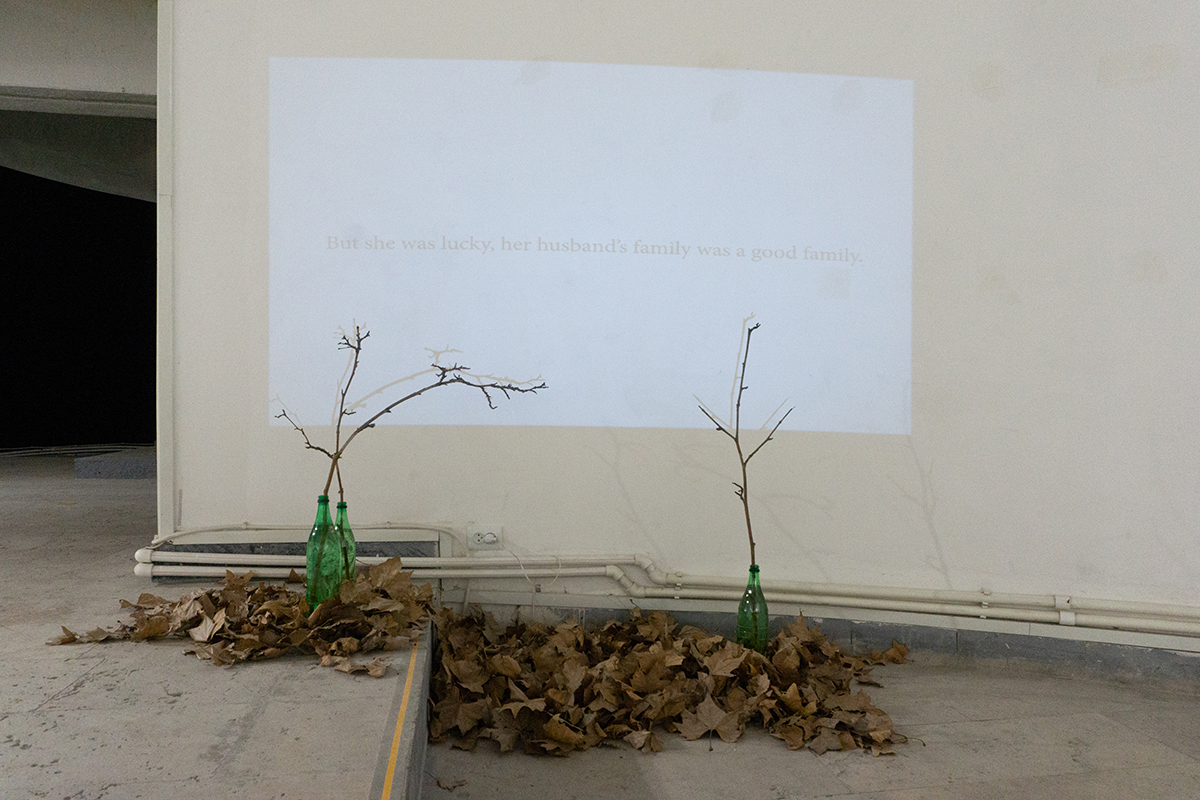 Exhibition view: Of Family Trees and Mountains, HayArt Cultural Center, Yerevan (AM) 2026
link to video (no sound!)
What is your surname?
Were you named after your father?
Were your children named after your husband?
Will your children be named after your husband?
Yes? Welcome to the heritage of paternal name lines.
But what about our mother’s names?
You probably know your mother’s and grandmother’s surnames, which are also their fathers‘ names. At least these are the names the women were born with and grew up with. In Europe it is common practice for women to change their surnames to their husbands’ names when they get married. Taking a woman‘s name away from her is a massive disruption to her identity. Changing her name to that of the husband is intended to make her feel like she belongs to him.
A woman is not a property.
Over centuries, this practice and the tradition of naming children after the father has systematically erased women‘s names in almost all cultures around the world, deliberately marginalising female identities, leading to their family histories being forgotten and sometimes even to preferring the birth of a son over the birth of a daughter.
Matrilineal cultures today only exist in Akan (Ghana), Mosuo (China) and Minangkabau (Indonesia). There, surnames and property are passed down through the mother, men move into the woman‘s house after marriage (‘matrilocal’) and women manage the family inheritance. Land and houses belong to the women.
I am not claiming that this is better. It simply shows an alternative way of expressing family bonds. Beyond bloodline ancestry or identifying family affiliation, there are many other naming practices.
A child is not a property. Any person is not a property.
In Iceland, children can be named after their mother or father by adding the suffix ‘-dóttir’, ‘-son’ or ‘-bur’ to the mother‘s or father‘s first name. In pre-medieval Europe, surnames were given according to a person‘s occupation or place of birth. In some Native American cultures, names referred to an individual characteristic of the person or a significant experience that person had gone through.
I am aware that violence occurs in families and marriages. Therefore, a name change can also mean a new beginning and detach a person from their painful past.
This work in no way condemns people who change their names.
It is an active resistance against patriarchal structures. It is an indictment of male power structures, control and possessive claims of our fathers and husbands.
It is an invitation to rethink the traditions we grew up with and to decide for ourselves what feels right for us.
Excerpts from the interviews:
“We have this painting of a family tree showing the names of the men and their children. You never get the wife’s name. Because it comes with the surname, that family tree. The daughters are painted on the leaves and the sons are painted on the branches.“
“I changed my surname recently. I made a double name with my mother’s surname. I wanted a reference to that part of my ancestry. There is my Armenian part of identity and the other one is the Ukrainian-Jewish one, which I wanted to acknowledge. It cost 50k AMD. After some mistakes I finally got my passport and I am a happy person.“
“In India you take your husbands name when you get married. It is not nice. Women are not respected for themselves.“
“My daughter thinks about changing her name from her father’s to mine since she is 8 years old. She is more feminist and thinking about the future, asking: “Mama, why your surname is going to be lost?”. She is now a teenager and still wants to change her name. I told her: “I think your father deserves his name to be continued. So maybe you should have both names.”. She decided to do so and now we are in the process of renewing first her birth certificate and then passport.“
“I changed my name. I combined the last names of both my parents and created a double name. It is illegal, so I paid for it. Now it is in my passport. I love my father a lot.“